The Fix Earth Myth

There is a dangerous hope circulating in the world of people, that technology is going to save our hide at the last moment, ingenuity will slip us a file in our prison, that we will escape the momentous event in Earth's history that we've let loose to stalk us on the surface of the Earth. This hope is predicated on a deceptively simple wish -- that we can clean up our messes if we really, really want to. The tenet of this philosophy supposes that we must be able to assume the mantle of responsibility if we are able to don the sorcerer's cloak of power. This is a comforting myth because it suggests that there is an ordained program of education built into the planet; it means Earth is built to withstand our learning curve. Even more seductively, it implies that the narrative leads inexorably to our acquisition of supreme authority and capacity, once we are ready -- with the gems of our self-realized priorities cemented in our crowns. All we have to do is be very, very clever, figure out how to mop up after ourselves.

Looking around at the planet, we can easily observe the massive scale of our reworking of the natural world. The land is shaped in our image, and much of it has the look of a creature that was learning on the job. Two-thirds of the planet is ocean, however, and it is there that our heavy imprint hits hardest. The small shreds of plastic that populate all our seas and Great Lakes is just a piece of very large puzzle for which we've lost the box with the big picture on it. Beyond the acidification issue, and fishing the waters to their bitter end, there is our sheer ignorance of that environment. It is a strange truth that we have a greater certainty about the conditions inside a black hole than we do about the Mariana Trench (let alone the thousands of sea-mounts that have not been explored, yet are scoured by dragnets every day).

Rather than the "Sorcer's Apprentice" story-line, imagine rather that we have entered a fiddling contest with the devil, and he has provided us the instrument -- a thousand strings, stops and frets we've never heard of, tuned to a scale that sounds almost familiar, but isn't -- and now he shoves us out on stage as the orchestra launches into the most sublime and intricate movement...the Music of the Spheres, perhaps. Our last 150 years of notes were not exactly off, but now the tempo is furious and the harmony hangs by a thread.

What do we do now? As far as mitigating disastrous climate change goes, we have to create room in the carbon budget within these next four years. If we can't halt the machinery of progress (or haven't the stomach to halt it), then the only other option on such short notice is decreasing the amount of energy coming into our greenhouse atmosphere.

This is the hope that "geoengineering" offers us right now. Specifically, there are chemical aerosols we can spew into the stratosphere which will increase the Earth's albedo -- the amount of sunlight reflected directly back into space before it is absorbed by the Earth and re-radiated as heat. We can call this "Global Dimming." A flurry of research has sprung up, studying the most effective and practical methods of delivering these aerosols to the stratosphere. When we imagine doing this, we intend to imitate the natural cooling effect that volcanic plumes have upon the atmosphere.

There are dangers to geoengineering; do it wrong, and we can create conditions of extreme drought in localized areas on Earth, we can rain poisonous sulfates down upon the land and the water. Do it for a time and then stop the program abruptly, and the Earth will experience sudden, intense global warming. (The Greenhouse Effect takes centuries to play out, whereas aerosols fall out of the atmosphere in a matter of days or weeks.) Do it unilaterally, and the lopsided distribution of wealth, and even sustenance, on Earth will worsen. Unfortunately, there is a lot of motivation for a country or small group of countries to act unilaterally. Our track-record for demonstrating altruism with respect to the climate is abysmal. Many sociologists and ethicists fear we haven't the moral fortitude to become responsible gods of weather.

That gets to the most looming danger of geoengineering: if we shape it to fit the Sorcer's Apprentice story, if we pretend that geoengineering is our way of being clever enough to clean up our climate mess, then we will really be adrift in a rough sea without a rudder. This is because geoengineering is not a clever fix; to think so is to miss the humongous size of the lever that we have pulled. To give just one example, Greenland is now spotted all over with softball-sized holes containing a mixture of slushwater and carbon soot (primarily from Northern Hemisphere factories and vehicles). These are melting Greenland from the inside out, as it were, and are accelerating the collapse of the ice-sheet there -- a truly massive transformation of our planet that will be felt everywhere.

The long train of consequences that begins with changing the Earth's energy balance will follow an altered course for hundreds of millennia to come, not just this one century we are looking at in our studies. At best, geoengineering can buy time to implement a carbon-capture regime and steer our way to carbon-neutral energy. That is enough reason for people to come out from the shelter of their own private lives and demand that our government throw its weight into geoengineering research and implementation now.

However, we are not going to be filling the atmosphere with aerosols for the next 300,000 years or more. And even if we started the program today, the Earth has absorbed enough heat to raise the surface temperature by about another 0.8 degree C, which is almost double the temperature variation of the last 10,000 years of civilization, and may be enough to cross the threshold into triggering other climate feedback. So, although geoengineering is a useful lighthouse to set our course by in a stormy sea, we must not aim for it as our only strategy, or we will be like moths sailing for an open flame.

Then, too, there is the larger lesson: not everything we've done on Earth can be corrected in a way that is convenient to our preferred story of ourselves. Some of it cannot be corrected at all, for such an amount of time that our intentions and priorities will be dust past broken by then. The rapist who offers his victim an Advil afterward is not absolved of crime. We've known a long time that what we're doing to Earth is obscene. Geoengineering will not fix the sorrow in our hearts the way that renouncing the abuse of the Earth will. For, our hearts and our story come not from our own grandeur, but from the Earth itself.


Why We Are Walking

Our world is changing forever. At least, the length of time that it will be different from anything we've ever known is so much longer than civil history that we might as well call it forever.

That is enough reason by itself to warrant walking many miles; why not do a ritual that testifies to the colossal transformation that is engulfing us? Climate change is perhaps as near to seeing the overt power of creation, across all its scales, as we will ever witness. Who would not walk a thousand miles to see the face of god?

Yet, it is becoming clear that many of you are confused why we are walking at all. We are frequently fielding comments that question what walking has to do with raising awareness of anything, and how we will manage it and keep our home life intact. Others assume that no one else will care if we walk, that it is a waste of our time, that we must be doing it because there is a fatal flaw with our living situation as it is.

Of course, there is a fatal flaw with our living situation – that is, with almost everyone's way of life. Where the trouble starts is in our minds; people are challenged to know how to abandon our crippled lives and step out on the road, as challenged as if we instructed you to start living in five dimensions instead of three.

We have a Waiting for Godot society here on much of Earth, where the daily habits of our lives, our chores and responsibilities and entertainments, loom like outsize fetishes because we've been priced out of the larger rhythms, participating in the true freedom of our lives is beyond our pay-grade to understand; and, if courage won't take our hand and show us the way to save ourselves, then lives stage-managed by corporate design teams and focus groups will have to do.

This passive society dies on the altar of change, just the same. For a while, authority figures get to ply the “Silent Treatment,” choosing non-reponse as the most expedient way to clear the board of protest, resistance, debate. Big Business, working with government, has stripped away the inconvenience of having to give mind to the conscientious law-breakers who demand attention. But, they are multiplying their wealth under the shadow of the biggest inconvenience of all, forgetting that they too are naked to the larger scale of change.

Unfortunately, when we confront the aggression of our lifestyle with non-violent protest, we are reinforcing the Waiting for Godot society, because a key principle that underlies non-violent action is “Good things come to those who wait.” With patience, we believe that we can reflect the dignity and justice of our position.

Last night, I had a dream which wove all these threads together. Like the TV commercial of a couple decades ago, I saw climate activists inverting a ketchup bottle, and waiting for the contents to slide out. But when I look closer at what's in the bottle, I see it is not ketchup after all, but glaciers the size of Manhattan that are collapsing, spoiling into nothing. When it comes to climate change, very bad things come to those who wait.

Given the pressing advance of climate change, and given that our world is changing forever, this is not the time to resist greed with non-violent action. We haven't the time, the profiteers of the Waiting for Godot world haven't the listening, the physics of the world is not sentimental.

A better model for bringing the needed remedy to our crisis is Aikido. Aikido is a Japanese martial art whose guiding principle is the use of force to bring one's adversary into parallel viewpoint with your own. In other words, an Aikido student does not attack an opponent to cut them down; every action, every move is employed to redirect the opponent's energy into bring them into common ground with yourself. There are thousands of actions that involve violence to the machine of suicide that is driving our society which can be carried out with the Aikido principle of love and respect for our opponent.

Our walking campaign can be understood as an aikido action better than as an action of non-violent resistance – it will make more sense that way. We are doing violence to our own participation in the Waiting for Godot world, we are dismantling our own fetishized habits and assumptions. We are doing this publicly and on the road. We will go as far as we have to, until our own silent treatment and disregard of the planet is devastated, and we can hear the voice of creation again. It will tell us the next step to take.

Onward


It is spring, and Pacing the Planet is picking up the standard again, setting out to raise the alarm about impending and utter climate transformation. We have at last decided on a route for our long journey. We will be headed north from the Pacing the Planet headquarters; our family intends, if possible, to walk 1,000 miles north to the tiny town of Pickle Lake, Ontario (population 425).  Pickle Lake is the most northerly community in Ontario that is accessible year-round by paved road, tucked in the midst of the boreal forest.

Why are we headed there? To represent human migration.  In a world where the average sea-surface temperature is 4 degrees C hotter, the whole planet is going to shift 1,000 miles toward the poles. That is, climate zones are going to move northward and southward by at least 1,000 miles. In our hemisphere, the tropics will spread. The mid-latitudes will creep northward. The arctic tundra will disappear.

Throughout natural history, plants and animals had free range over connected habitats.  Even before humankind broke up these natural corridors, 10 miles is the very farthest that most non-migratory species could relocate in a given year.  Trees can only spread their seeds so far;  birds and mammals can only move when the plants and animals that they feed upon move with them.  We expect to travel an average of 10 miles a day.

It will take us four months, minimum, to cover 1,000 miles, and it would take plants and animals 100 years. But, we don't have 100 years before the average temperature reaches 4 degrees C. We have only 30 years. Unfortunately, with today's decimated environment and broken habitats, with roads and agricultural fields and fences and towns in the way, many species will not be able to keep up with the rapidly shifting planet. Whole ecosystems hang in the balance.

This past fall and winter has shifted the national debate on what to do about global warming. Following the disastrous growing season of 2012, New York City experienced firsthand the destruction of a major storm system enhanced by global warming. Suddenly, a small, but growing, number of courageous politicians are ready to speak out in favor of decisive action. The federal government has put in place the most stringent requirements ever for fuel-efficiency in automobiles. And for the first time, the EPA will have the power to regulate carbon-dioxide as an “atmospheric pollutant”, starting in 2015. In addition, every federal agency has been directed to calculate for climate change when assessing the environmental impact of the projects they review.

At the same time, our civilization's emissions of carbon-dioxide and methane continue to increase exponentially. The battle lines have been set, as the fossil fuel industries press their political agenda, and their opponents challenge them in Congress, in court, and on the street. ExxonMobil, TransCanada, and Peabody Energy (based in St. Louis), in particular, are in the crosshairs as they attempt to hold on to government subsidies of their industries while doing what they can to tighten their grip on the energy market in this country and abroad.

A decision to approve or reject the Keystone XL Pipeline is expected from the Obama administration in the next couple of months, but oil-pushers in Congress are attempting to claim authority to approve the construction project before the administration has a chance to weigh in on it. The pipeline is the subject of much propaganda currently, including the suggestion that it will improve our domestic energy independence, even though the Tar Sands oil will actually be shipped overseas for use, and profits will go to energy giant TransCanada. If the pipeline is approved by either Congress or the president, it will mark the beginning of an all-out struggle for the future of our planet. Those who understand that we are losing the climate we have depended on for the last 10,000 years will know then that they cannot count on politicians to implement even the most basic sensible policies to save us. We shall be keeping track of the situation as we walk north.

We are currently making preparations for our adventure. We are opening the invitation to people who would like to walk with us part way (or all of the way). We also could use a passionate volunteer to drive our vegetable-oil powered supply truck to each day's camp site, and help set up camp there. If you might be interested in participating, let us know. Or, if you want to cat-sit, house-sit, or make a bid on the project of mowing our grass as we pace, now's the time.

Before we begin our journey, Pacing the Planet is offering some exciting events this April. First, on the 19, we will be giving a presentation at Dancing Rabbit Ecovillage. Then, on April 22, Earth Day, we will be presenting at Quincy University. We are currently arranging our second presentation at Truman State University in Kirkville, also during Earth week.

Finally, we are organizing a special event on Saturday, May 4, in Kirksville: the only NEMO big-screen showing of the amazing documentary "Chasing Ice," which is currently in limited release. "Chasing Ice" tells the story of one team's effort to document the dramatically changing landscape in the Arctic, due to global warming. We, who are alive today, are the last living people who will ever see that landscape the way it has been since the last ice age, and you do not want to miss this film.  Many people who were climate change skeptics have left the theater after seeing this film with their beliefs radically transformed, now understanding that climate change is the most critical emergency humanity has ever faced. You can reserve tickets to the film by clicking on the appropriate tab at the top of this page.  We would love to share this one-time showing with you:  our last event before we set out on our walk.

Planetary To-Do List

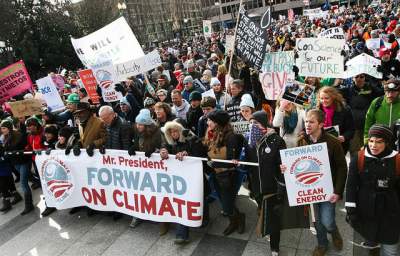
We have returned from the "Forward on Climate" rally in Washington, D.C., encouraged to find so many people who are adamant that this will be the turning point when Americans finally take the global warming situation seriously.

Still, questions abound as to what to do; so much of the information about potential solutions to the problems of carbon pollution is anecdotal and contradictory. Some of the drawbacks to the solutions are dated, and have been resolved with further development. What's needed is a comprehensive map of the problems and solutions, drawn up by people who are fully cognizant of the degree of emergency we're in, and who are prepared to speak about it.

Here is our model of what that could look like, with information gleaned from insiders in the energy sector, government advisors, small-scale innovators, as well as published articles from the last four years.

The major problems:

1) Greenhouse gases are continuing to accumulate exponentially in the atmosphere and in the oceans. Weather response to this climate forcing has become routinely severe. The total volume limit for human-generated greenhouse gas which can be tolerated by life as it currently exists on Earth will be reached in about 17 years (with current emissions rates holding). More than 90% of that additional volume beyond today's levels will be emitted by developing economies, primarily in China and India. The most rigorous analysis of the budgeting of the remaining volume of greenhouse gas allowed by convention indicates that major per-capita polluters like the U.S., Canada, and Australia, have no share left in that remainder to be filled. 

2) Ocean acidification and raised ocean temperatures, plus the poisoning, trashing, and over-fishing of the oceans, has made collapse of some key ocean food-chains a pending catastrophe. This is critically important because ocean phytoplankton provide 70% of our breatheable oxygen, planet-wide. Their populations must be stabilized or we could experience a rapid oxygen-deprivation event on Earth.

3) Some known feedback loops are apparently already engaged, and will accelerate these first two problems beyond our ability to control them, likely within the next 10 years.

Solutions:

1) In the short-term, there is not enough time to implement (and retrofit) modifications to the supply side of energy production to successfully meet greenhouse gas emissions quotas. Therefore, a managed depression of the economy (i.e. a controlled slowing of the growth of industry) is required. Demand must be lessened.

2) In the medium-term (the next 20-30 years), wind-power must be employed widely. Improvements to turbine design have made them much less impacting upon bird and bat populations, and improvements in construction are enabling new, taller designs with longer blades that turn more consistently. Wind-power stands ready to become a provider of base-load energy.

3) Development of algae-based ethanol fuel must dramatically lower the emissions output from the transportation sector. This can be accomplished to by the further development of regional light-rail lines. Intra-continental flight must be abolished.

4) Orbital energy supply must be fully explored and developed, whether solar-powered or near-frictionless flywheel-powered. A design plan for a 3-mile wide solar collector that beams energy down to recipients on Earth by microwave has been optioned this year for consideration by NASA.

5) Along with the rehabilitation and redesign of the world's electricity grids, we must move away rapidly from an "on-demand" model of energy use in developed nations, to an "intelligent-planning" model. Small-scale trials, where individuals have awareness of peak hours for electrical demand, as well as peak-hours for electrical supply, and work to engage with that schedule responsibly, have produced significant reductions in energy consumption. In addition, energy demand "loads" should be paired with appropriate power sources to provide a diverse spectrum of energy solutions on the community scale, to improve efficiency of the system.

6) We must invest in atmospheric carbon-capture research as fully as necessary to bring an easily scalable model to production within the next ten years. One such device being developed currently is no bigger than a shipping container, captures 1 ton of carbon-dioxide each day, and can be "rinsed" of its stored carbon simply by washing the collection media with water in a vacuum chamber. 288,000 of these devices, placed anywhere in the world, could neutralize our current human-sourced emissions of CO2 planet-wide.

These  measures, undertaken by the U.S. in cooperation with a government that is willing to use Congress' authority to regulate interstate commerce to more greatly control the fossil-fuel industries, can truly bring our country to a carbon-neutral stance by 2020. We can achieve the 8% per year reductions in emissions that the analysis of the carbon budget requires of us. To do so will mean suspending the usual functioning of our economy, and embracing an all-out cooperative and "can-do" attitude, paired with debt-forgiveness on a large scale, and perhaps a system of currency demurrage, to get resources flowing at the rate needed to address the problem.

Whether we can curb our greenhouse gas emissions fast enough to avoid the "point of no return" which is looming in the near future of the chaotic climate system is very uncertain. The window of opportunity to act is closing more rapidly than we dare imagine, most days. The inertia of the energy imbalance driving global warming is such that the Earth will continue to heat up at its surface for many years after we stop forcing the situation with our carbon emissions. This inertial heating may bring the planet to the threshold where more natural feedback loops begin to amplify the warming. However, that only underlines the importance of acting now with real concerted effort. This is the last moment in which we will be major players in the current global warming story. It is time for us humans to play our trump card, whatever that is.

To protect the oceans, we must:

1) stop supporting abusive commercial fishing practices, particularly long-line fishing.

2) Protect sharks as the top predators in most marine ecosystems. They set the population dynamics of the species below them in the food-chain.

3) Develop and protect estuaries and wetlands that border our oceans, for they are the breeding grounds for many of the species that regulate the chemistry of the seas.

4) Regulate the use of plastic so that it becomes prohibitive to manufacture or buy plastic in a disposable fashion, if that plastic is not carefully recycled. Ban the shipping of plastic pellets internationally on the open seas. Sponsor a contest with a major cash prize for innovative solutions to mitigate the "Great Garbage Patches" of the world's oceans.

5) Halt off-shore drilling. Particularly in areas where large volumes of methane clathrates are embedded (like the Arctic Ocean).

Of course, there is a vast, nebulous transformation that must be made at this time, which fits under the heading of Human Identity. We must decide what we are here for. Having learned that we cannot exploit the Earth as one dumb gift of resources, having realized that we are not the only important actors on the world stage, we must re-assess how we will belong on this new Earth that demands balance, restraint, wisdom, and the quieting of our desire to be mighty. How will we let everyone know that the consequences of his actions are indeed felt across the planet? How will we arrive together at the message about our reality here on Earth that this climate crisis is mumbling as it kills us? Can we accept a world, deeply accept a world in our hearts, where we are not the center of attention, yet where what happens is not random? Will enough of us, just now, see the big picture?

Last Stand of Common-Sense

Listen. You're being lied to. Even the politicians who are coming around, at this late date, to speaking soberly about global warming are still framing the situation as if it will affect our grandchildren (it will, and their grandchildren, and their grandchildren, and so on, for at least a thousand years, minimum), but not affect us now, severely, over the next few decades. They are not declaring the real score: deserts; droughts; floods; killer storms; unearthly fires; bleached and naked, dying seas -- all this century. Measurable progress slowing the global rate of carbon emission: none.

Here's the shocker: the solutions for these problems have already been found! If implemented today, we could stanch the rise in world average temperature, hold it to a 2 degree C rise with 88% likelihood of success. I don't mean just replacing our grid electricity source with wind and solar power. The technology already exists (and the know-how) to gassify and burn fossil fuels much more efficiently, yield less of the carbon by-products, and even create a pathway toward burning waste organic matter on a large scale.

The reason that we are not putting these power players into the field now to even the score is obscured by economic rhetoric that is masking suicidal stupidity. We are told: these solutions are not yet cost effective. Before you accept that statement hook-line-and-sinker, consider what it really means. We are faced with broad extinction of life on Earth, perhaps even of ourselves, and recasting the planet as inhospitable territory for perhaps a longer period of time than modern humanity has been on the ground (and perhaps even longer than that). Given these consequences, wouldn't it be reasonable to do everything in our power to forestall such an eventuality, even if it meant tanking our man-made economy?

Imagine playing the board-game Monopoly, and discovering that the house you are in is burning. Wouldn't you get up and exit the building immediately, or attempt to extinguish the fire, even if it meant all your property deeds and monopoly money went up in flames? Only an absolutely asinine fool would sit there guarding his hotels and railroads while all hope of escape vanishes, and death creeps ever closer. In fact, the only trouble with this analogy is that, in the real world, there is no escape from the burning house. If we fail to lift our eyes and resolve the consequences of our aggressive fuel policies, we will bar passage out of hell not only for ourselves, but everyone around us, and 50% or more of the species that share Earth with us.

So what is the real problem? “Not cost effective” means that either we can't be bothered to do what needs to be done at any cost, guarantee a certain standard of living to the myriad workers who would be involved in implementing one of the available solutions, or there aren't workers out there who are ready to say: “Yes, I will be part of this. I will not charge by the hour, I will work overtime, I will accept a fixed wage – heck, I'll even do this as a quasi-internship for a stipend –, because this work needs to get done.” This is the kind of attitude that powered the massive upscaling of industry necessary to meet the military demands of World War II, and the men and women, even the children, of that era rose to meet the requirements.

We now face a moment of similar, but greater, necessity. And here's the truth: I believe that there is no shortage of individuals who would gladly work under such conditions and blow up the usual me-first attitude of the laissez faire economy, going to whatever length necessary to halt our march toward annihilation. I suspect that for every person headed to the oil fields or natural gas rigs right now, there are five people who would sign on to extraordinary work conditions if it would save us. The need for it just has to be clearly explained to the people, and the government has to lead us in taking the first step beyond the limited framework of our free market. The government can still lead us in saying, “We will bother to do what the moment requires, regardless of cost, outside of cost, in a new day where co-operation beats the current attitude of milking each other for our last dimes.

Join us in Washington, D.C., Sunday, Feb. 17, on the National Mall, for a massive protest declaring our rejection of the Keystone XL Pipeline, which promises, if completed, to bring ruin to humanity's attempts to limit our greenhouse gas emissions. Urge the Obama administration to do the “common-sense” thing, and block the Tar-sands pipeline. We hope to see you there!

an outreach letter

An example of the outreach efforts of Pacing the Planet, this is a letter we wrote today to a group in Chicago:

Hello [climate change event organizer],
Our names are Gavain U'Prichard and Dana McGuire. We are co-directors of the Pacing the

Planet project. Thank you for speaking at length with David last night about your exciting climate event upcoming in February. We read through the conversation you had, and we would like to clarify what our position is, so that your coalition of groups can decide if they would like to hear more from us in the near future.

Although our presentation is based on the work of several eminent scientists, the conclusions are decidedly not the communication that scientists have offered so far to the popular press, nor to politicians. We anticipate that some or all of the information we have to share will be included in the 2014 IPCC report -- however, it will be too late by then to act on some critical pieces of it.

We therefore consider ourselves emissaries of the politically inexpedient scientific truth of what is really happening currently with the climate, the story that is going unrepresented completely, even by worthy allies and advocates like Bill McKibben.

Here is a list of places in our presentation where we differ starkly with Bill's information offered in the Do The Math tour. We believe that you are not likely to find this material represented elsewhere...at least, we haven't found it entering into the public conversation.

1) The planet is not on a 2-degree C emissions pathway, nor even close to it. We're on a 6-12 degree pathway within the century. We are off the chart of even the most unrestrained "business as usual" scenario formulated by the IPCC in 1999-2001. Our current trajectory places our very own generations squarely in the path of "beyond dangerous" warming.

2) The window for achieving a leveling off of world temperature increase at 2-degrees C has probably already closed. Peer reviewed work by Professors Kevin Anderson and Alice Bows of the University of Manchester and the Tyndall Centre in 2008 (and updated in 2011 and this year) indicates that under the best circumstances, countries like the U.S. have to significantly turn the corner on CO2 and methane emissions by 2015, and reduce emissions by 6-8% per year thereafter, not 18% by 2020, as the Obama administration has regulated. When continuing deforestation is factored in (as well as data that significant methane clathrate destabilization began in 2007, etc.), the U.S. has no share left in the remaining carbon budget. Leading UK climatologist Kevin Anderson concludes that we simply don't have time to scale up wind and solar power, or nuclear power, in order to meet the timeline for sticking a landing at a 2-degree maximum rise with 50% probability. He calls for a managed economic downturn, stating firmly that it is not reasonable to keep using carbon-dioxide emitting energy sources until such a time that the larger green power grid can be depended upon to fuel our current lifestyle of flagrant consumption. That strategy, currently our default, will be our medium-term undoing. Our death.

3) We agree with Bill McKibben and others, recognizing that political plans that intend to regulate a slow reduction in greenhouse gas emissions through 2050 with the intent of leveling off at a 2-degree C rise in planet temperature (plans that neglect to reference the cumulative carbon budget) are ineffectual and therefore meaningless.

4) We agree with Professors James Hansen, Naomi Oreskes, and Erik Conway that carbon cap-and-trade schemes are inherently unable combating global warming. We understand why they cannot work and why they have historically failed to curtail acid rain to the necessary degree. We call for a carbon fee and dividend, though at a significantly increased rate than is currently proposed in the House of Representatives legislation, and even more than has been called for by Hansen. The newest incoming data from climate researchers requires steeper measures taken.

5) Our presentation discusses the role of methane in greenhouse warming: specifically, while methane is understood to have 25 times the climate forcing power of CO2 on the 100-year timescale, it is known to have 72 times the climate forcing power of CO2 on the 20-year timescale, which is the time-frame in which most climatologists believe we will reach the "point of no return," when the climate system irrevocably moves toward a new stable state, much warmer climate, regular extreme weather events, and the most rapid mass extinction in the history of our planet. Therefore, we advocate for aggressively regulating methane emissions (ie. livestock) as well as fossil fuels emissions. This work is backed up with research by Professor Barry Brooks of University of Adelaide, Australia, among others.

6) Perhaps most importantly, we present information that, due to the approximate thirty year lag time in the response of the climate warming to increased climate forcing (the release of carbon dioxide emissions, in this case), and due to the increasing inauguration of new feedback loops (augmenting the speed as well as the intensity of the warming), the safest estimate for policy purposes is that as the planet continues on a "beyond business-as-usual" pathway for 4 to 8 more years, we will lock ourselves into a 4-degree C rise in planet temperature by 2050-2060, yielding "beyond dustbowl" conditions in much of the interior U.S., raising the threat of catastrophic flooding more than 100-fold, consigning the Amazon rainforest to become savannah and/or desert, and ultimately creating an ice-free planet. Additionally, the current 200-species-a-day extinction rate would escalate to a probable 50% species loss worldwide. (At a 6-12 degree rise in temperature, the extinction level goes up to 95%, historically.)

Last year, the International Energy Agency produced a major report which found that [unless significant room is created in the carbon budget, by 2017] existing fossil fuel infrastructure will certainly carry the planet to a 2-degree rise. (This analysis did not factor in the Keystone XL pipeline.) After that point, any new oil wells dug, coal mines opened, or coal plants brought online would definitively take us past 2 degrees. For these reasons, we advocate that the time is now for a 3-pronged approach of large scale political leverage to support the imposition of a carbon fee, to end fossil fuel subsidies, to prohibit the Keystone Pipeline, and implement a carbon rationing system; secondly, of major civil disobedience to effectively shut down the demand cycle for fossil fuels (sit-ins, refuse to burn carbon days, refuse to go to work days, re-stickering merchandise with "actual cost" price stickers, blocking fuel stations etc.), and, thirdly, clandestine sabotage of fossil fuel industry infrastructure to buy time for legislation and for the development of the alternative energy distributed grid.

7.) We present on means of carbon mitigation and sequestration that have not received as much attention as stratospheric geoengineering, but may be as effective or more effective, such as the large scale production of biochar as an endstage process in the agricultural cycle. We offer data that suggest biochar formation from corn stalks and soy remains in the U.S. alone could yield a 10-20% reduction in atmospheric carbon concentration. We draw from the work of Dr. Albert Bates, author of The Biochar Solution: Carbon Farming and Climate Change (2010).

8) Because our audiences have always consistently wanted to know more about us and our project www.pacingtheplanet.org, we usually also spend at least a few minutes telling our story...for some people, this is the most compelling inspiration which we can offer.

This has been our attempt at a summary of the content of a presentation we would offer currently, which we gather would help inform the goals and strategy of your organizing efforts.
It is our understanding that, at best, we are at the very fulcrum point of a planetary event that will play out for 100-400 thousand years (and perhaps as much as a million years) according to Professor Curt Stager. Therefore, we feel it is imperative that we share this information as widely as possible, so that our society can rise to meet the challenge of the climate emergency, or have as much time as possible to prepare, if we fail to avoid the "point of no return." If your coalition feels that input from Pacing the Planet would be helpful in forming the parameters of your event, or even presenting at your event, please let us know. At this time, our headquarters resides in rural northeast Missouri (6 hours from Chicago), but we stand by, ready to plan train or vegetable-oil-fueled transport to your area with some degree of advance notice. Our primary purpose in existing is to communicate this information to all who are ready to assimilate it.


Sincerely,
Gavain U'Prichard and Dana McGuire

The New Conversation We Must Have

Something has changed. Can you tell? It seems – perhaps – that the U.S. is at last ready to have a sober and thorough conversation about the different planetary conditions we've ushered in. It is as if someone smacked the American public upside the head, and shouted in our ears: climate change is real. Well, of course, something did thrash us, or at least, the east coast, by far the most populous part of the country. As has been well-publicized by now, Superstorm Sandy, which flooded lower Manhattan, killed dozens of people, flattened houses, and left millions without power, has been publicly tied to global warming. Meteorologists are still issuing caveats that no single storm can be definitively tied to climate change (James Hansen's new mathematical approach to analyzing this problem, aside), but – without a doubt – people are recognizing that the current rise in sea level makes storm surges all the more hazardous. Sandy had the largest combined tide and storm-surge in the recorded history of New York City. In addition, several meteorologists have suggested that the atmospheric blocking pattern which steered Sandy back toward land, rather than out to sea, as is traditional for hurricanes on Sandy's early path, seemed to result from the extreme polar sea-ice melt this summer.

Regardless, if Sandy is a harbinger of our near-future world, picture this: New York, the illuminated bastion of high-profile, climate-controlled, ultra-wealthy style, culture, and class was laid low. What could be more iconic of our predicament than people stuck in high-rises with no electricity, no water, no food?

Although, as a single event, Sandy hasn't yet rivaled 9/11/2001 in monetary cost to the city, it is becoming clear that looking at ourselves in the climate mirror is going to be a more expensive taking-stock than the War on Terror has been, thus far—and even more so if we don't act now. The International Energy Agency has calculated that every dollar we delay in spending now on alternative fuel technology and other climate change mitigation will cost $4.30 if we wait until 2020. By then, conditions will almost certainly already be such that everyone will recognize we must throw our economy at this problem, it is no longer a choice to ignore it. (I can tell you that, here in northeast Missouri, we are experiencing our third “Indian Summer,” and the odd weather patterns just continue as they have for most of this past year. We will experience another severe drought in the next few years, I am sure.)

Sandy is helping break the ice (no pun intended) for politicians to once again address global warming. This time, however, the conversation is different: fiscal conservatives like NYC mayor Michael Bloomberg are coming on the record saying the jig is up, climate change is underway, it is having severe consequences, and we must act now. This is putting strain on the Republican party, which still harbors veritable lunatics like Sen. Jim Inhofe, who still bellow that global warming is a fraud. (One wonders whether Inhofe actually understands that the wildfires which ravaged his state of Oklahoma this summer are expected to increase in frequency and intensity, as global temperatures rise.) Global accounting agency Price Waterhouse Cooper advised their business clients last week to prepare for a 6º C change in global average temperature by the end of the century.

We who know that the planet is on the brink (or perhaps just past it) of a major tipping point in the climate system have a critical moment to ignite the conversation in a new, a-political way, one that presents the undiluted truth. According to Kevin Anderson, what we must say is this: there is not time to roll out efficiency improvements, solar- and wind-powered electrical grids, shut down coal, and convert the world's fleet of vehicles to run on some other fuel than petroleum. There isn't time to develop carbon capture and sequestration.

On Nov. 6, Anderson gave a speech to the Cabot Institute in Bristol, England, and he presented the stark truth more clearly than he ever has before. Every industrialized country is pledged, morally and legally, not to allow average global temperature to rise more than 2º C above the pre-industrial average. Given that accomplishing this task of limiting the temperature rise in this way means reducing our CO2 emissions by 8% per year, industrialized countries like the U.S. have no moral or legal choice except to foment a managed economic downturn. You heard me. We have to accept significant austerity measures, rationing, cease unnecessary flying. No more unnecessary, on-demand, 24/7 electric availability. We can live with two hours of electricity a day.

Sure, we still need to leverage the fossil fuel industry to abandon its genocidal business model, we must replace coal, oil, and natural gas with wind, solar, wave, and maybe nuclear power. We need governments to enact a carbon tax (thank goodness the U.S. is talking about it again). Moreover, that tax needs to be heftier than the modest, politically anodyne proposals put forward so far. But, Anderson argues, if we can't transform or limit supply in the miniscule time-frame left (the brave, post-fossil-fuel world would need to be well off the ground by 2015 at the very latest), then we must cut the throat of demand.

If you think this is a lot to accept, now you understand why we need real, rigorous debate; particularly, we need climate activists who don't blanch and yield when the other side dismisses reality as “politically unfeasible,” or “unrealistic.” With that in mind, I'd like to describe two recent events that we at Pacing the Planet have witnessed, which illustrate well the kind of pitfalls that any of us can trip into, if we don't hold firm the context of the emergency at hand.

A few weeks ago, we brought Pacing the Planet to the University of Missouri campus in Columbia. We walked with our carts around the sprawling grounds of the school, and we met with members of the student group Coal Free Mizzou, who are working to end the burning of coal in the university's self-owned power and heating plant. The students told us that they had been in long negotiations with the university, haggling over the time-line and funding of the power plant's transition to burning solid biofuel. As it stands, the university is unwilling to pledge to a specific date when it will stop burning coal, even though Bill McKibben himself called up the president of the school, while a live audience watched, and cajoled him to come to the bargaining table with calendar in hand.

Coal Free Mizzou has been wisely pressing for 2015 as the year when the university will no longer burn coal, but the student members have been sucked into a vortex of negotiation with a university administration that has not willingly handed over crucial pieces of data that they have collected, related to the would-be transition away from coal. The administrators are not replying to certain letters of inquiry, and consequently the students have filed a Freedom of Information Act request. The school is arguing that the plan to navigate the Mizzou away from coal needs to be balanced with the other financial expenses of the university – and, to a large extent, it seems that Coal Free Mizzou has capitulated on this point.

I understand that they have made progress (they believe) with the administration, but I think letting officials dictate the context of the negotiation is a mistake. The rational position to take with the university is actually simple: if you can't run the school without burning coal, then you must stop running the school. There is no meaningful future for all of these students graduating into their various fields of expertise and employment if the world temperature rises by 6º C. Hunting for car-keys under the light because you can see there, even when you know the keys were lost in the dark, will not yield you the keys. Pretending that there is some more economically salubrious approach to saving what's left of the climate will not tack hard enough against the current that's carrying us off the cliff into desolation. It's time to play hardball. And, when the university (or whoever it is) responds: “You're not ready to have a real conversation about this, a balanced and mature conversation about this,” we reply: “No. You're not ready to face the truth. We are no longer in partnership with you.” And, we withdraw. We disenroll. We divest ourselves and our future from madness. We quit our jobs. We take care of each other, and we cut demand off at the tap.

The second event we witnessed, on Nov. 5, was a debate between Bill McKibben and Alex Epstein, president of the Center for Industrial Progress, at Duke University. McKibben presented a litany of the troubling data coming from around the world, as the planet's ecosystems come under stress from increased temperatures and the rest of climate change. Epstein offered one chart that appeared to show the rate of fatalities due to climate is decreasing, even as temperatures increase by a “small amount.” He suggested that technology is more than equipped to deal with any minor environmental change coming our way, and declared that, in calling for a moratorium on fossil fuels, McKibben is morally, if not legally, culpable for murder. McKibben's agenda, Epstein claimed, is going to starve people all over the planet.

I'll leave it to you to find the flaws in Epstein's arguments (and there are many). People: these are not the debates we should still be having. I would have been happier if McKibben, once he discovered that Epstein was going to dredge up this debunked drivel, fail to address McKibben's statistics in detail, and generally build an ad hominem attack against McKibben through repeating this one, scary message that McKibben was out to deprive poor people of food (this is such a terribly ironic and malicious projection of consequences from the fossil-fuel industry's own practices in poorer countries of the world, where they have plundered resources while decimating the environment, depriving locals of traditional food sources).... well, I wish McKibben had just walked off the stage, saying, “Let me know when you want to have a real debate.” Yes, I understand that McKibben got his two minutes here and there to present the terrible present reality of advancing climate change to those who would listen, but his ongoing participation in the “debate” lent credibility to the whole event, as if this really was a powerful, substantive combat of ideas. For shame. We climate activists need to keep our eye on the ball, and not get faked out by curveballs and change-ups that slow-pitch the true nature of this climate crisis. Good eye, good eye.